


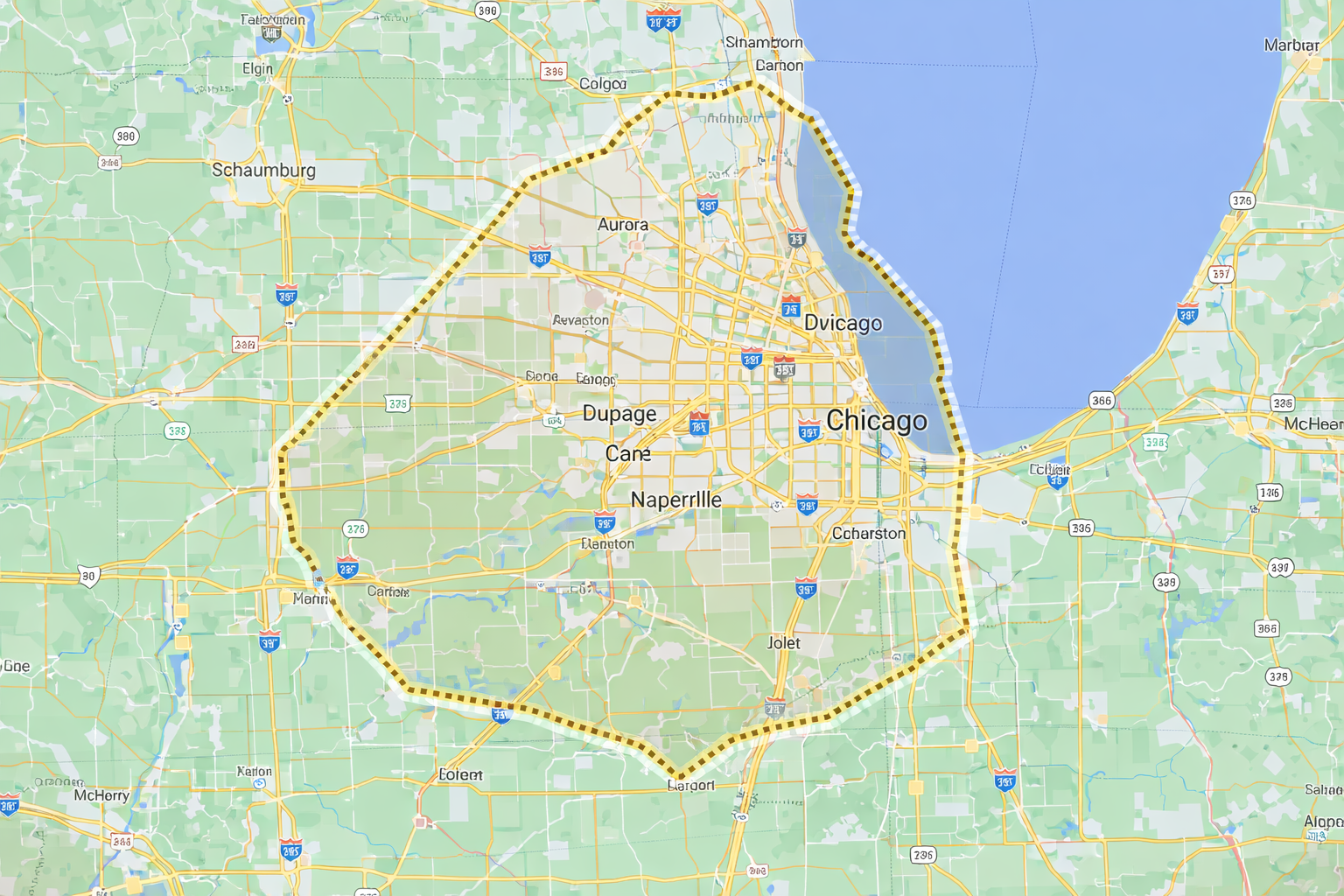
You don’t need a paid ad budget to show up first when someone in your neighborhood searches for the service you provide. What you need is a smart strategy focusing on local SEO for service businesses, and the patience to build it the right way.
For service businesses like roofing companies, dental practices, law firms, and contractors, the customers who matter most are almost always within a few miles of your business. Hyper-local SEO is the discipline of making sure Google knows exactly who you serve, where you serve them, and why you’re the most relevant result when a nearby customer searches.
This guide covers what hyper-local SEO is, why it matters more than general SEO for service businesses, and the specific tactics you can implement today, without spending a dollar on ads.
What Is Hyper-Local SEO?
Standard Search Engine Optimization (SEO) helps your website rank for broad search terms. Hyper-local SEO goes further. It targets search queries tied to a specific city, neighborhood, zip code, or even a landmark.
Instead of ranking for “roofing company,” you’re ranking for “roofing company in Wheaton IL” or “emergency roof repair Carol Stream.” Instead of “dentist near me,” you’re targeting “family dentist Naperville 60540.”
This level of specificity is what separates a business that shows up for the right customers from one that gets buried in generic results. It’s also the foundation of effective marketing for local businesses, especially for service providers who rely entirely on their geographic area for revenue.
Why Hyper-Local SEO Matters More Than General SEO for Service Businesses
A national e-commerce brand needs to rank broadly. You don’t. You need to rank where your phone rings.
Consider the way people actually search when they need a service. They’re often on a mobile device, they’re often in or near your service area, and they’re often ready to act. Google has tuned its algorithm to reward businesses that clearly signal local relevance. This means that the more specific and consistent your local signals are, the better your chances of appearing at the top.
Staying current on Google Algorithm Updates is part of any serious local SEO effort, because Google regularly adjusts how it weights local signals like proximity, relevance, and prominence.
The Core Pillars of Hyper-Local SEO
1. Your Google Business Profile Is Everything
If you haven’t fully optimized your Google Business Profile (formerly Google My Business), stop everything else and do that first. It is the single most powerful free tool for local visibility. Strong Google business page marketing means more than just claiming your listing, it means actively managing it.
Here’s What A Fully Optimized Profile Looks Like:
- Your business name, address, and phone number (NAP) exactly match what’s on your website.
- Your primary and secondary categories are precise, not generic.
- The service area you serve is defined by the specific cities and zip codes you serve.
- You have at least 10 to 15 recent reviews with thoughtful responses from you.
- You post updates, offers, or photos at least twice a month.
- Your hours, services, and description are complete and keyword-rich.
Google treats your Business Profile as a living document. Businesses that actively maintain it signal relevance and rank higher in the local map pack, which is the three-result block that appears before organic results for most local searches.
2. NAP Consistency Across the Web
NAP stands for Name, Address, Phone Number. Google cross-references your business information across dozens of directories, citation sites, and social platforms. If your address appears differently on Yelp than it does on your website or Google profile, it creates a trust signal problem. This can include something even as small as “St.” vs. “Street.”
Audit your NAP across the major directories: Yelp, Angi, Better Business Bureau, Houzz (for contractors), Healthgrades (for dental), Avvo (for legal), and any local chamber of commerce listings. Fix inconsistencies wherever you find them.
3. Location-Specific Pages on Your Website
One of the most underused hyper-local SEO tactics is creating dedicated service area pages on your website. Instead of one generic “Service Area” page, build individual pages for each city or neighborhood you serve.
A HVAC contractor serving DuPage County, for example, might have separate pages for Naperville, Wheaton, Lisle, Carol Stream, Bloomingdale, and Downers Grove. Each page should include:
- The target city name naturally woven into the title, headers, and body copy.
- Content specific to that community: local landmarks, neighborhood references, or relevant project examples.
- A clear call to action with a local phone number or contact form.
- Embedded Google Map showing the service area.
These pages work because they align with the way people actually search. They also create multiple entry points into your site, which supports a broader content marketing strategy without requiring a paid campaign.
4. Local Link Building
Links from other websites signal authority to Google. Local links from other businesses, organizations, and publications in your geographic area signal local authority specifically. Understanding what is link building and how it works is essential before you start pursuing them.
For local service businesses, the best link-building opportunities are often the most natural ones:
- Sponsor a local youth sports team or community event and get listed on their website.
- Join your local chamber of commerce, as the directory listing alone is a quality local link.
- Partner with complementary businesses and cross-link.
- Get featured in a local neighborhood blog, news outlet, or community Facebook group that has a web presence.
None of these require a budget beyond what you’d already spend on community involvement. They’re relationship-based, and they pay long-term SEO dividends.
5. Reviews: The Local SEO Currency
Reviews are one of the most heavily weighted factors in local search rankings. Volume matters. Recency matters. And the content of the reviews, when customers naturally mention your service type and location, sends powerful relevance signals to Google.
Build a simple, repeatable system for asking satisfied customers to leave a review. A follow-up text or email with a direct link to your Google review page removes all friction. Aim for a steady stream of new reviews rather than a burst followed by months of silence.
One thing to be careful about: never solicit, purchase, or manufacture reviews. Beyond the ethical issues, fake reviews can result in penalties from Google that are difficult and time-consuming to recover from.
6. On-Page SEO Optimized for Local Intent
Every page on your website is an opportunity to reinforce your local relevance. This means going beyond just adding your city name to the title tag. Think about how search intent works for someone in your service area.
Your home page, service pages, and blog posts should all include:
- Location-modified title tags and meta descriptions (“Water Heater Installation — Naperville, IL”).
- Local keywords woven naturally into the first 100 words of body copy.
- Schema markup for local business, including address, phone, and service area.
- Internal links connecting your service pages to your location pages and blog content.
If you’re not sure your site is set up to support this kind of optimization, it may be worth reviewing your website design services setup or looking into website care plans that keep your site technically sound over time.
How Long Does Hyper-Local SEO Take to Work?
Honest answer: it depends on your market, your starting point, and how consistently you execute. In less competitive suburban markets well-optimized local SEO can produce noticeable movement in the map pack within 60 to 90 days. Think DuPage County zip codes rather than downtown Chicago. Full organic ranking improvements often take 4 to 6 months.
That timeline is why consistency matters so much. Businesses that treat local SEO as a one-time project rather than an ongoing practice almost always plateau. The businesses that dominate their neighborhoods are the ones that treat it like maintenance, something they wotk on regularly.
This is also why working with a marketing company near Naperville that understands the local competitive landscape can accelerate your results. A good marketing company already knows which neighborhoods are saturated, which keywords have manageable competition, and what your specific competitors are doing.
Hyper-Local SEO vs. Paid Ads: The Key Differences
Paid ads can get you to the top of search results quickly, but the moment you stop paying, the visibility disappears. Hyper-local SEO takes longer to build but delivers compounding returns. A blog post or location page you optimize today can drive leads for years.
For service businesses that want a durable, cost-effective visibility strategy (especially those who prefer not to manage ad spend) hyper-local SEO is often the better long-term play. It also tends to generate higher-trust clicks, since organic and map pack results are looked at as more credible than paid placements by many searchers.
If you’re evaluating your overall approach, understanding the new marketing mix model for small service businesses can help you see where SEO fits alongside your other channels.
Where to Start If You’re Overwhelmed
If all of this feels like a lot, start with just two things:
- Fully complete and optimize your Google Business Profile today.
- Audit your NAP consistency across your top 5 directory listings.
Those two actions alone will move the needle faster than almost anything else for a local service business starting from scratch. From there, add location pages, build reviews, and work on your on-page optimization one step at a time.
If you’d rather have an expert audit your current setup and build a prioritized action plan, our digital marketing services are built specifically for service businesses that want real local visibility without wasting budget on tactics that don’t fit their model.
You don’t need to outspend your competitors to outrank them. You just need to out-optimize them, neighborhood by neighborhood, search result by search result. That’s exactly what hyper-local SEO does.